
A refrigerator is one of the hardest-working appliances in your home, so it’s normal for it to make some sound. However, when a refrigerator making loud noise suddenly grabs your attention, it’s fair to wonder: why is my refrigerator making noise?
Some refrigerator noise is completely normal, while other sounds may signal an issue that needs attention. In this guide, we’ll break down the most common refrigerator noises, what causes them, and when you should take action.
Why Refrigerators Make Noise
Refrigerators rely on several moving parts to keep food cold, including a compressor, fans, and a defrost system. As these components turn on and off throughout the day, they naturally create sound. When noises become unusually loud or persistent, refrigerator repair services can help diagnose whether the issue is normal operation or a sign of a failing component.
A refrigerator making noise doesn’t automatically mean something is wrong, the key is identifying which noise you’re hearing and how often it occurs.
Common Types of Refrigerator Noise and Their Causes
1. Refrigerator Making Buzzing Noise
A refrigerator making buzzing noise is one of the most common complaints homeowners report.
Possible causes:
- The compressor running (normal in short bursts)
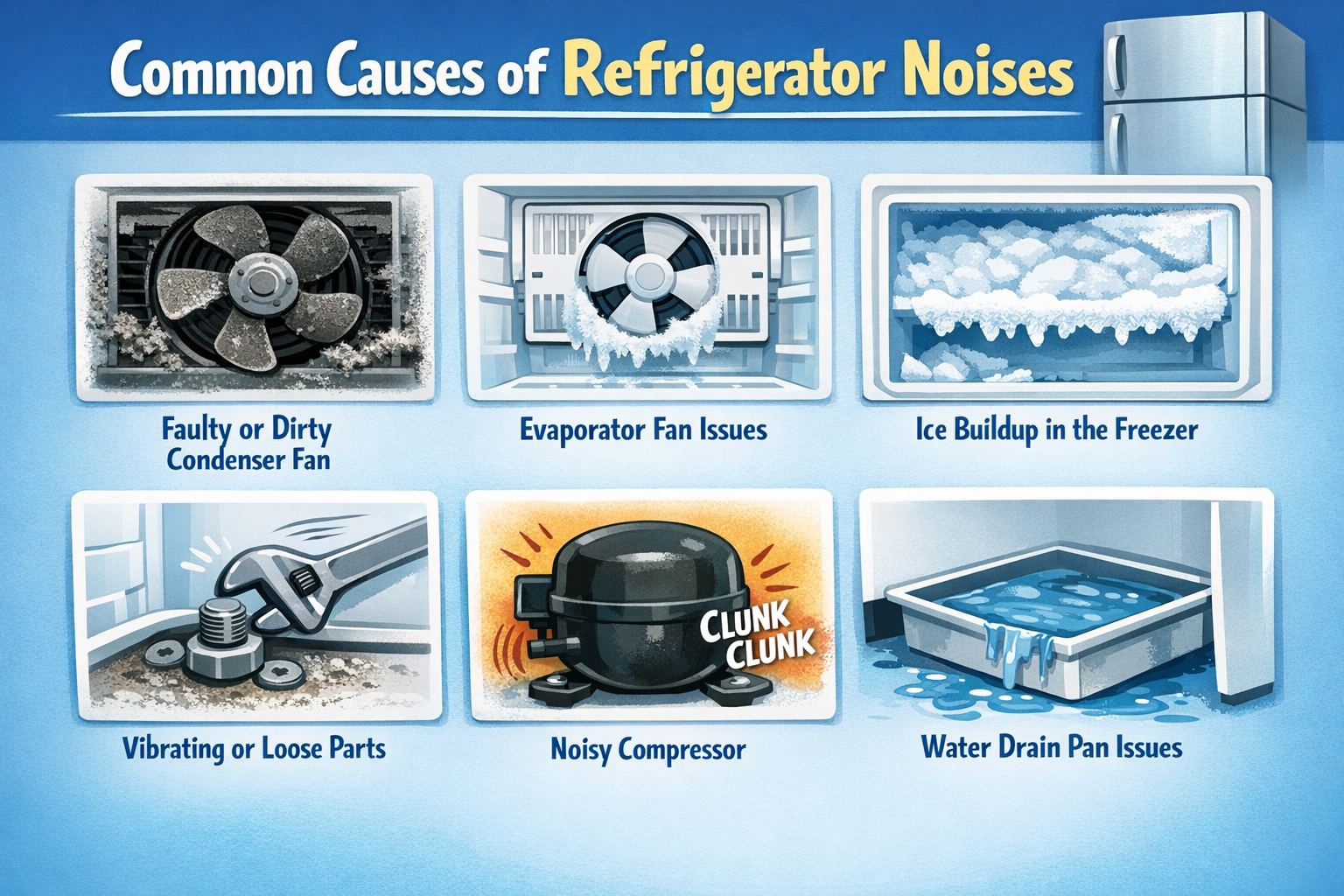
- A clogged or dirty condenser coil
- A struggling condenser fan
- Ice maker cycling or filling with water
If the buzzing is loud, constant, or getting worse over time, it may indicate the compressor is under strain and should be inspected.
2. Refrigerator Making Humming Noise
A refrigerator making humming noise is often completely normal.
What it usually means:
- The compressor is running
- The refrigerator is maintaining temperature
- The condenser fan is circulating air
A low, steady hum that comes and goes is typically nothing to worry about. However, excessive humming could point to airflow issues or dirty coils.
3. Rattling or Vibrating Noises
If your refrigerator sounds like it’s shaking or vibrating, placement is often the culprit.
Common reasons:
- The refrigerator isn’t level
- Loose panels, shelves, or drain pans
- Items inside the fridge vibrating against each other
- The unit touching a wall or cabinet
Simple adjustments, like leveling the fridge or tightening loose parts, can often eliminate this type of refrigerator noise.
4. Clicking or Ticking Sounds
Clicking noises usually occur when the refrigerator cycles on and off.
Typical causes include:
- Compressor start relay engaging
- Defrost timer activating
- Temperature control switching modes
Occasional clicking is normal. Repeated or rapid clicking, however, may signal a failing relay or electrical issue. You can also view real examples of refrigerator repairs in our repair gallery to see how these issues are typically resolved.
5. Grinding, Squealing, or Scraping Sounds
These noises are more concerning and usually point to fan problems.
Likely causes:
- Worn evaporator fan motor
- Ice buildup interfering with fan blades
- Debris caught in the condenser fan
If your refrigerator making loud noise that sounds mechanical or metallic, it’s best to address it quickly to avoid further damage.
6. Gurgling or Dripping Noises
Gurgling sounds often come from refrigerant moving through the system or water draining during the defrost cycle. While this type of refrigerator noise is typically normal, persistent dripping or gurgling from the freezer may indicate a defrost system issue that could require freezer repair service.
7. Knocking or Thumping Sounds
A knocking sound can occur when the compressor turns on or off or when internal components shift slightly during temperature changes.
If the knocking is loud or frequent, it may indicate loose internal components or compressor issues.
What Refrigerator Noises Are Normal vs. Problematic?
Normal refrigerator noise includes:
- Soft humming
- Brief buzzing
- Occasional clicking
- Light gurgling or dripping
Noises that may indicate a problem:
- Persistent loud buzzing
- Grinding or squealing
- Continuous rattling
- Sudden changes in noise level
If you find yourself asking, “why is my refrigerator making noise all of a sudden?”, it’s a good idea to investigate further.
When to Call a Professional
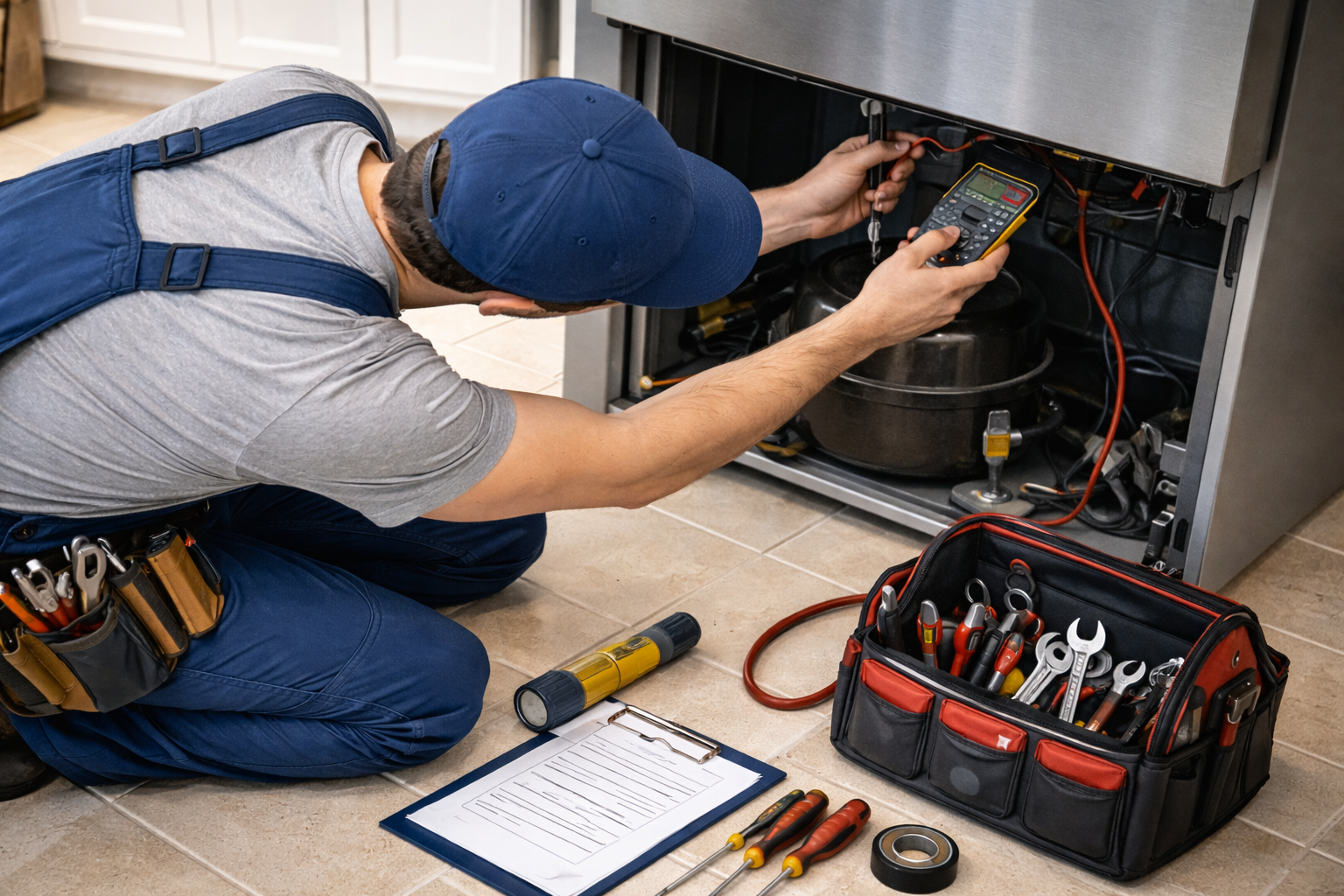
You should contact a technician if:
- The noise persists after basic troubleshooting
- You hear grinding, squealing, or loud buzzing
- The refrigerator struggles to maintain temperature
- The compressor appears to be failing
Ignoring abnormal refrigerator noise can lead to more expensive repairs down the road, which is why it’s best to schedule online with a professional as soon as unusual sounds persist or worsen.
Conclusion
A refrigerator making loud noise can be annoying, but it’s often a helpful warning sign. Understanding common refrigerator noises makes it easier to determine whether the sound is normal or a sign of trouble.
If you’ve been wondering why is my refrigerator making noise, identifying the type of sound is the first step toward a quieter, more efficient appliance.